
Crypto on Campus: Budget-Friendly Strategies for Students
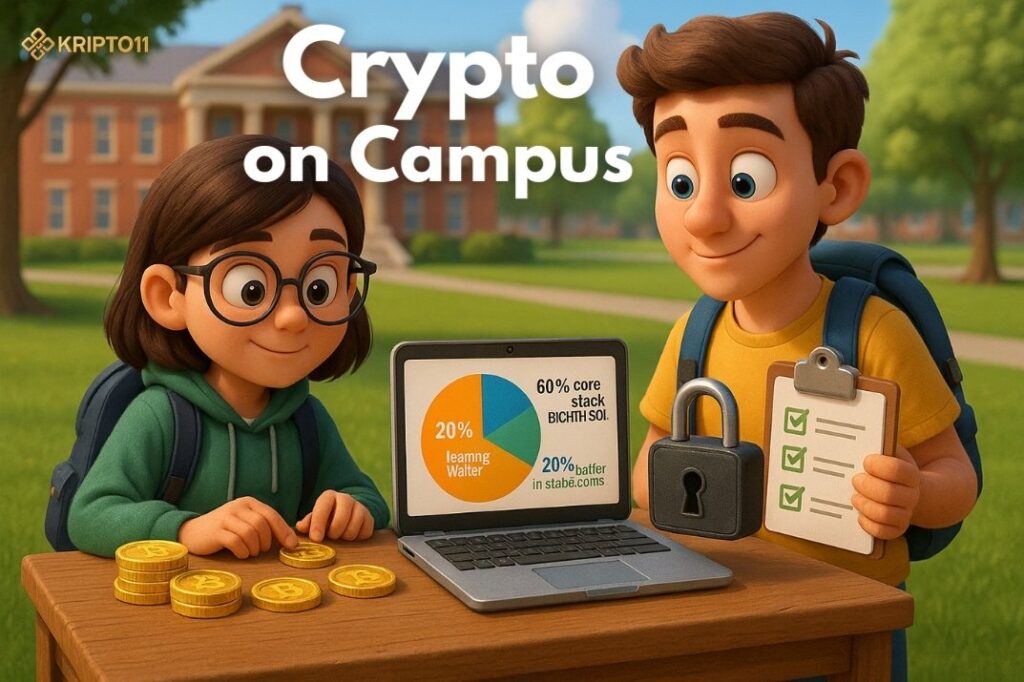
You don’t need deep pockets to start. With a steady plan, tight security, and simple tools, students can learn fast and build small digital positions without blowing the coffee budget. This Crypto on Campus guide shows you how to find free crypto on campus, automate saving, avoid scams, and turn micro-habits into long-term skills.
Free crypto on campus the smart way
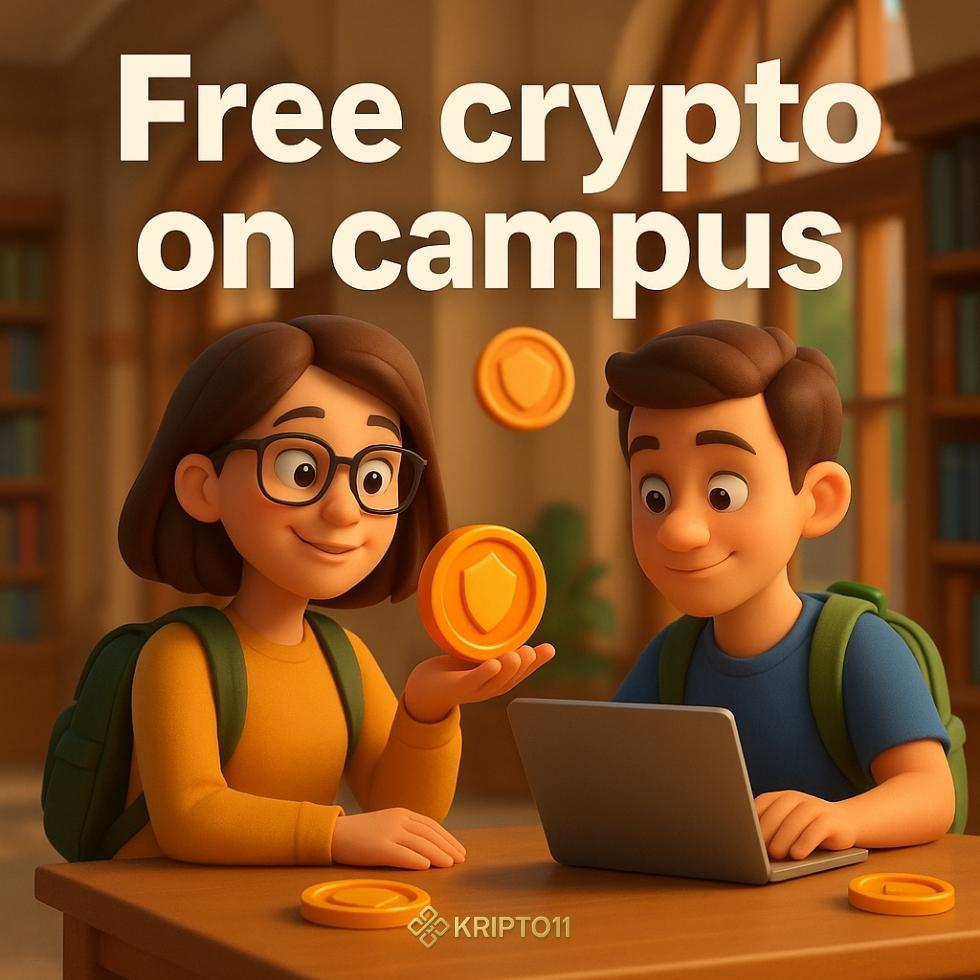
Plenty of “free” offers exist on campus, but not all are equal. This section shows how to approach free crypto on campus with guardrails, so you gain skills first and avoid traps. When you hunt free crypto on campus, prioritize programs that teach, verify sources, and never ask for seed phrases.
Where real “free” value comes from
- Education bounties and learn-to-earn modules: finish bite-size lessons to get small token rewards.
- Hackathon swag and club airdrops: join campus blockchain clubs; contribute, don’t just collect.
- Testnet quests: complete tasks on testnets; you gain skills first and sometimes future rewards.
Campus checklist
- Use a throwaway hot wallet for experiments and a vault wallet for savings.
- Track cost per experiment and keep it under a weekly cap.
- Screenshot confirmations and keep a simple ledger; clarity beats memory.
Spot the safe offer – Crypto on Campus
Legit programs never ask for seed phrases. Therefore, avoid any “support” chat that pushes you to a fake form or APK. Use official links only.
Optimize time, not hype
Rank tasks by skill growth and cost. Consequently, you build compounding knowledge instead of chasing random tokens.
Build a zero-FOMO student budget
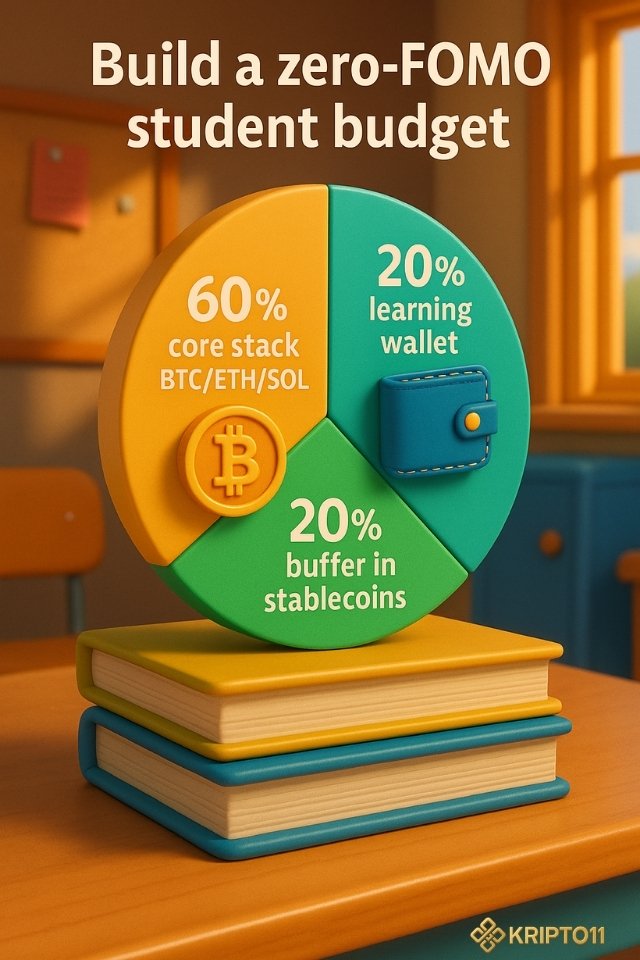
Set a monthly amount after essentials. Then allocate:
- 60% core stack (BTC/ETH/SOL or your thesis).
- 20% learning wallet for experiments and low-cost mints.
- 20% buffer in stablecoins for dips and fees.
Use weekly recurring buys to smooth volatility. Moreover, place buys on the same day and time to reduce decision fatigue.
Fee tactics that compound
Prefer maker orders, consolidate small transfers, and avoid peak-fee hours. As a result, more of your cash reaches the assets.
The one-page review
Document each buy: reason, time horizon, and exit. Afterwards, prune losers early and recycle lessons into your rules.
Security first: wallet hygiene for dorm life
Security breaks-or protects-everything else.
Non-negotiables
- Seed phrase on paper; store in two separate places; never in cloud notes.
- Two-wallet setup: hot for daily use, cold/hardware for savings.
- Device hygiene: update OS and browser; remove sketchy extensions.
- Approval discipline: check permissions; revoke what you don’t need.
Crypto on Campus :Public Wi-Fi rules
Use a VPN, auto-lock your screen, and avoid transactions on unknown networks. Consequently, shoulder-surfing risks drop.
Social engineering shields
Verify handles and URLs. Furthermore, skip any “urgent help” message that asks for funds or codes.
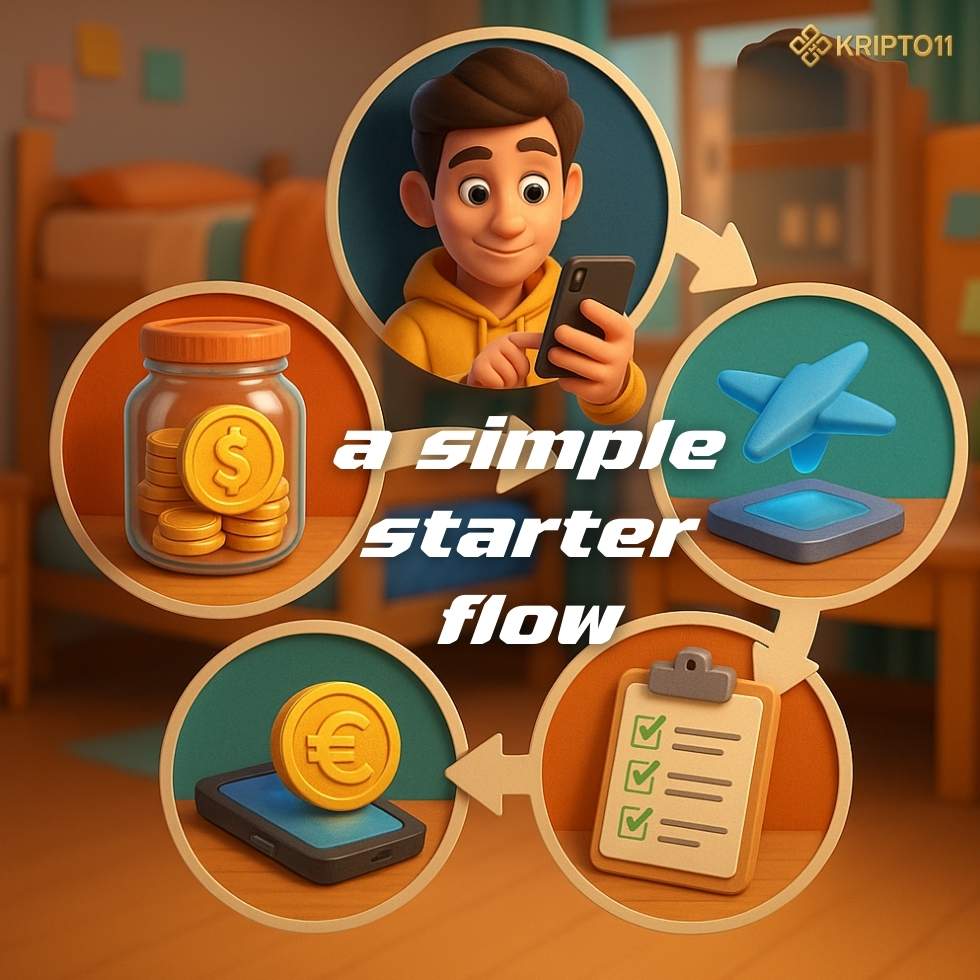
From $5 to first on-chain action: a simple starter flow
- Learn free: read docs, watch short primers, and pass learn-to-earn quizzes.
- Testnet reps: bridge, swap, or mint on testnets to understand flows.
- Low-cost mainnet drill: perform one tiny transaction to feel real constraints.
- Review & record: note fees, confirmations, and UX friction.
- Iterate weekly: repeat the drill with slightly new actions.
What utility looks like for students
Favor perks that help studies or work software credits, course passes, or event access. Therefore, even if price chops, value remains.
Exit rules for tiny accounts
Before you buy, define a stop-loss and a time limit. Because decisions feel easier under stress when rules already exist.
Crypto on Campus trends to watch in 2025
- Education-first rewards will expand. As a result, newcomers can build skills while earning small tokens.
- Mobile-first wallets will speed onboarding; however, protect them with strong device pins.
- Community credentials (on-chain badges) will help clubs verify contributors.
- Low-cost NFTs for events and labs will grow; they make attendance and access auditable.
Healthy program signals
Look for clear instructions, public treasuries or budgets, and predictable timelines. Additionally, teams should explain setbacks openly.
Red flags you should skip
If rewards require fees upfront or “guaranteed returns,” walk away. Likewise, avoid programs that gate access behind non-refundable payments.
FAQ – Crypto on Campus, investing
Q1. How much should a student start with?
Start with what you can lose without stress often $5-$20 weekly. Because consistency beats timing, DCA works well.
Q2. Where can I find free crypto on campus?
Check club channels, official hackathon portals, and verified learn-to-earn platforms. Importantly, never share seed phrases.
Q3. Should I chase airdrops or build skills?
Build skills first. Meanwhile, do clean, documented tasks that might qualify you later.
Q4. What wallet setup suits dorm life?
Use one hot wallet for daily actions and a hardware or cold wallet for savings. In addition, store seed phrases offline.
Q5. How do I keep fees low on a tight budget?
Batch transactions, prefer maker orders, and avoid peak times. Consequently, your net contributions rise.
Q6. How do I avoid scams in student groups?
Verify domains, ignore “urgent support” DMs, and never input codes into forms sent by strangers. Moreover, use official links only.



Telegram mini app
Telegram bot
USDT
Casino Telegram bot
tikiokviral
One-hand inspired
telegram casino bonus
Drumstick
Crypto
PGslot
TON Wallet
Telegram mini app
Telegram bot
TONT wallet
idansumbing
tikiokviral
LINK IN BIO
telegram casino bonus
One-hand inspired
idansumbing
PGslot
idansumbing
Telegram mini app
Telegram bot
USDT
Casino Telegram bot
tikiokviral
One-hand inspired
telegram casino bonus
Drumstick
Crypto
PGslot
TON Wallet
Telegram mini app
Telegram bot
TONT wallet
idansumbing
tikiokviral
LINK IN BIO
telegram casino bonus
One-hand inspired
idansumbing
PGslot
idansumbing
Telegram mini app
Telegram bot
USDT
Casino Telegram bot
tikiokviral
One-hand inspired
telegram casino bonus
Drumstick
Crypto
PGslot
TON Wallet
Telegram mini app
Telegram bot
TONT wallet
idansumbing
tikiokviral
LINK IN BIO
telegram casino bonus
One-hand inspired
idansumbing
PGslot
idansumbing
Telegram mini app
Telegram bot
USDT
Casino Telegram bot
tikiokviral
One-hand inspired
telegram casino bonus
Drumstick
Crypto
PGslot
TON Wallet
Telegram mini app
Telegram bot
TONT wallet
idansumbing
tikiokviral
LINK IN BIO
telegram casino bonus
One-hand inspired
idansumbing
PGslot
idansumbing
Telegram mini app
Telegram bot
USDT
Casino Telegram bot
tikiokviral
One-hand inspired
telegram casino bonus
Drumstick
Crypto
PGslot
TON Wallet
Telegram mini app
Telegram bot
TONT wallet
idansumbing
tikiokviral
LINK IN BIO
telegram casino bonus
One-hand inspired
idansumbing
PGslot
idansumbing
Telegram mini app
Telegram bot
USDT
Casino Telegram bot
tikiokviral
One-hand inspired
telegram casino bonus
Drumstick
Crypto
PGslot
TON Wallet
Telegram mini app
Telegram bot
TONT wallet
idansumbing
tikiokviral
LINK IN BIO
telegram casino bonus
One-hand inspired
idansumbing
PGslot
idansumbing
Telegram mini app
Telegram bot
USDT
Casino Telegram bot
tikiokviral
One-hand inspired
telegram casino bonus
Drumstick
Crypto
PGslot
TON Wallet
Telegram mini app
Telegram bot
TONT wallet
idansumbing
tikiokviral
LINK IN BIO
telegram casino bonus
One-hand inspired
idansumbing
PGslot
idansumbing
Telegram mini app
Telegram bot
USDT
Casino Telegram bot
tikiokviral
One-hand inspired
telegram casino bonus
Drumstick
Crypto
PGslot
TON Wallet
Telegram mini app
Telegram bot
TONT wallet
idansumbing
tikiokviral
LINK IN BIO
telegram casino bonus
One-hand inspired
idansumbing
PGslot
idansumbing