
Building wealth in Crypto works best when your plan runs on rails. Crypto Savings with DCA (dollar-cost averaging) gives you that rail: you buy small, on schedule, regardless of mood or headlines. Add automation, simple yield steps, and tight risk controls, and you’ll stack Bitcoin or your chosen core assets while avoiding most “oops” moments. This guide compares using one Crypto wallet versus several, looks at multichain support (including Anyswap Multichain-style routing), and shows how to wrap your DCA with rebalancing rules so your stack stays aligned with your goals.
How to do DCA in crypto?: a step-by-step playbook
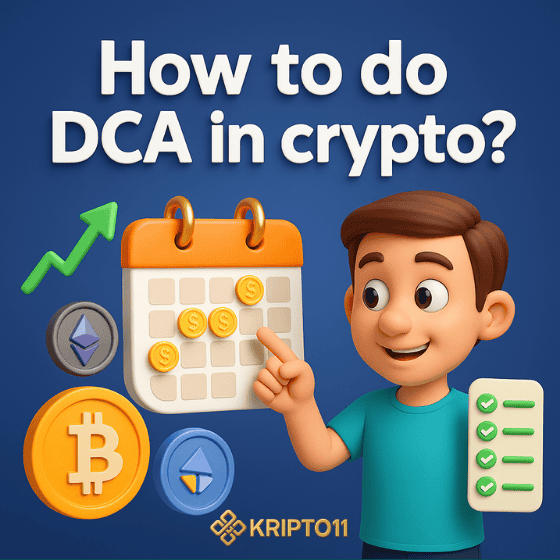
You asked specifically for “How to do DCA in crypto ?.” Here’s a concise, repeatable flow that keeps bias and timing stress out of the picture.
1) Pick your core and satellite assets
Start with a core sleeve, often Bitcoin plus one or two majors. Then add a small “learning” sleeve for exploration. Example split: 60% core (BTC/ETH or BTC/SOL), 20% learning, 20% buffer in stablecoins for tactical buys.
2) Choose cadence and amount
Weekly and biweekly schedules tend to balance fees and smoothness. Fix a base amount per run; increase only after income rises or costs drop. Moreover, keep the amount boring, DCA works because it’s predictable.
3) Select rails and custody
Use an exchange or on-ramp that funds your Crypto wallet automatically after each buy. Prefer direct-to-wallet settlement to reduce platform risk. If you can, route to a self-custody wallet you control.
4) Automate, then label everything
Stand up a scheduled purchase, automate transfers, and tag each transaction: DCA-BTC-2025-11-03. Therefore, audits become painless, and your dashboard stays readable.
5) Track with guardrails
Set alerts for missed runs, price slippage, or fees above a threshold. Additionally, keep a simple sheet or dashboard that shows cumulative cost, average buy price, realized yield, and allocation drift.
One wallet or many? Multichain support and UX trade-offs
Should you consolidate or split? The answer depends on how you balance convenience, fees, and failure isolation.
Single-wallet setup: when simplicity wins
- Pros: Streamlined UX, fewer approvals, one seed to protect, easier automation.
- Cons: All eggs in one basket; risk isn’t compartmentalized; cross-chain swaps may add friction.
Best for: New savers, small monthly amounts, or anyone optimizing for speed.
Multi-wallet setup: when isolation matters
- Pros: Compartmentalized risk (DCA wallet vs. Trust wallet vs. long-term vault), clearer bookkeeping, cleaner permissions.
- Cons: More keys, more maintenance, slightly slower UX.
Best for: Larger balances, yield experimentation, or teams with shared SOPs.
Multichain routing, bridges, and fees
Sometimes your core asset lives on one chain while an attractive yield venue sits on another. Cross-chain aggregators, Anyswap Multichain-style routers and similar DEX tools, can help you move value efficiently.
However, bridge only with purpose, verify destination contracts, and test with a small transfer first. Furthermore, compare: swap+simpler custody vs. bridge+lower APR. Many times, fewer moving parts beat a tiny APR edge.
Yield safeguards: earn without stepping on landmines
You don’t need “max APY.” You need consistent, low-drama yield that doesn’t jeopardize your stack.
Choose conservative sources first
- Native staking or delegated staking on major chains (where applicable).
- Battle-tested liquidity venues with long uptime and public audits.
- Short-duration instruments or vaults that let you exit cleanly.
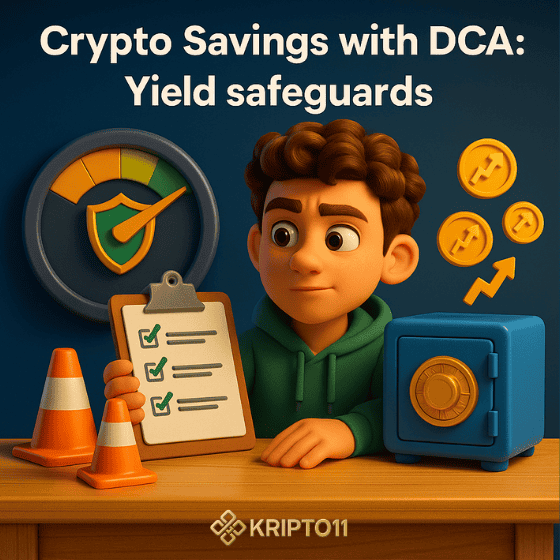
Crypto Savings with DCA: Safeguard checklist
- Cap exposure per venue (e.g., 10–20% of portfolio).
- Use allowlists for addresses and dApps; block new approvals by default.
- Approval hygiene: review token approvals monthly; revoke stale ones.
- Stablecoin diversification: not all stables behave the same during stress.
- Cold vault rule: move profits to a long-term vault periodically.
Exit plan, always
Write the exit before you enter: which signal triggers withdrawal? Where does the principal go next? Because you’ve pre-written the play, you won’t freeze under pressure.
Risk controls and rebalancing rules that scale
DCA stacks assets; rebalancing keeps the stack aligned.
Crypto Savings with DCA: Allocation bands
Define bands around your target weights (e.g., BTC 60% ±5%). If BTC rises to 66%, trim to 60% and move the excess to your buffer or to underweight assets. Conversely, if BTC falls to 54%, top it up on the next run.
Drawdown and position caps
- Single-asset cap: don’t let one asset exceed a ceiling (e.g., 70%).
- Venue cap: don’t allow more than X% in any one protocol or platform.
- Drawdown guard: if an asset falls >Y% from your DCA average, pause yield activities on that asset until volatility cools.
Automation with review cadence
Automate the checks (alerts for drift, fees, or APR drops). Still, review monthly to adjust bands, raise the DCA amount, or pause experiments. Consequently, your plan evolves without knee-jerk changes.
Tooling stack: Crypto wallet + automations that play nice with DCA
Good tools make the plan durable.
Wallet tiers that map to tasks
- Hot DCA wallet: receives scheduled buys; minimal approvals.
- Yield wallet: interacts with protocols; has tighter approval policies.
- Cold vault: hardware wallet or multisig for long-term storage.
Routing and swaps
If you must go cross-chain, use reputable routers or Anyswap Multichain-style aggregators. Test with a micro-amount first, then scale. Additionally, record the route you used so you can repeat it with fewer mistakes.
Monitoring and logs
- Price/fee alerts for each run.
- Approval tracker to surface old permissions.
- Rebalance dashboard highlighting allocation drift.
Moreover, a lightweight spreadsheet tracks average cost, cumulative units, realized yield, and cash buffer.
Security hygiene-Crypto Savings with DCA
- Separate email/2FA per wallet tier.
- Use unique passphrases and hardware where possible.
- Back up seeds offline; test recovery once with a tiny wallet.
Therefore, a single mishap won’t cascade through your entire setup.
FAQs: Automating Crypto Savings with DCA
1) What is Crypto Savings with DCA?
A scheduled plan that buys small amounts of crypto regulation to average your entry price over time.
2) How to do DCA in crypto the right way?
Pick core assets, set a fixed cadence and amount, automate buys to your wallet, and track costs and allocation drift.
3) One wallet or many for DCA?
Start with one for simplicity; move to multiple when balances grow and you need isolation for yield and vaulting.
4) Do I need multichain tools like Anyswap Multichain?
Only if your asset and yield venue live on different chains. Otherwise, keep routing simple and avoid extra risk.
5) How do I add yield safely?
Favor conservative venues, cap exposure per protocol, review approvals monthly, and maintain an exit plan.