


Reddit can feel like a hive mind for quick wins. Threads pop up with “can’t-miss” signals, screenshots of perfect entries, and a friendly nudge to mirror the trade. Yet the Polygon wallet Reddit pipeline often hides a familiar trap: botted calls, spoofed PnL, and slick dApps that ask you to sign approvals you don’t fully read. This guide shows how the bait works, why copy-trading on social can spiral into losses, and how to harden your workflow without turning crypto into a full-time paranoia project.
Trust Wallet reality check: copy-trading isn’t a shortcut
You can absolutely use Trust Wallet on Polygon; it’s convenient and mobile-first. However, copy-trading via Reddit still carries platform-agnostic risks. The Crypto wallet brand doesn’t cancel them. Your habits do.
What copy-trading promises vs. what it delivers
- Promise: “Just mirror my wallet. Easy gains.”
- Delivery: You inherit someone’s latency, slippage, and risk curve. If they front-run, you pay the premium. If they shill, you hold the bag.
The quiet killer: approvals and allowances
Copy-trading threads often link a “helper” site. You connect, then approve a token with a max allowance. From there, a malicious spender can move funds later using transferFrom. The trade might look fine today, yet the drain can happen next week.
Minimum viable safety with Trust Wallet
- Set custom spending caps instead of unlimited.
- Revoke allowances after each experiment.
- Keep a burner wallet for every new tool. Move funds in, don’t leave permissions out.
How “Polygon wallet Reddit” threads prime the scam
Reddit is great for discovery, yet social proof can be faked.
Social-proof loops
Upvotes and “worked for me!” replies feel persuasive. Nevertheless, shill rings coordinate karma, recycle screenshots, and post look-alike comments hours apart. It reads organic; it isn’t.
Edit history sleight of hand
Creators post “real-time” calls and later edit timestamps or captions to look prescient. On fast chains like Polygon, minutes matter. That edit turns your mirror trade into exit liquidity.
The “community tool” gambit
A thread links a “copy-trade dashboard” that aggregates whales. It looks professional. It even shows Bitcoin and large-cap tickers to feel legit. Yet when you click Connect, the site asks for broad permissions or routes you to a shady contract. That’s not analysis. That’s a wallet trap.
Anatomy of a Polygon copy-trade scam (step-by-step)
Understanding the pattern makes it easier to nuke it on sight.
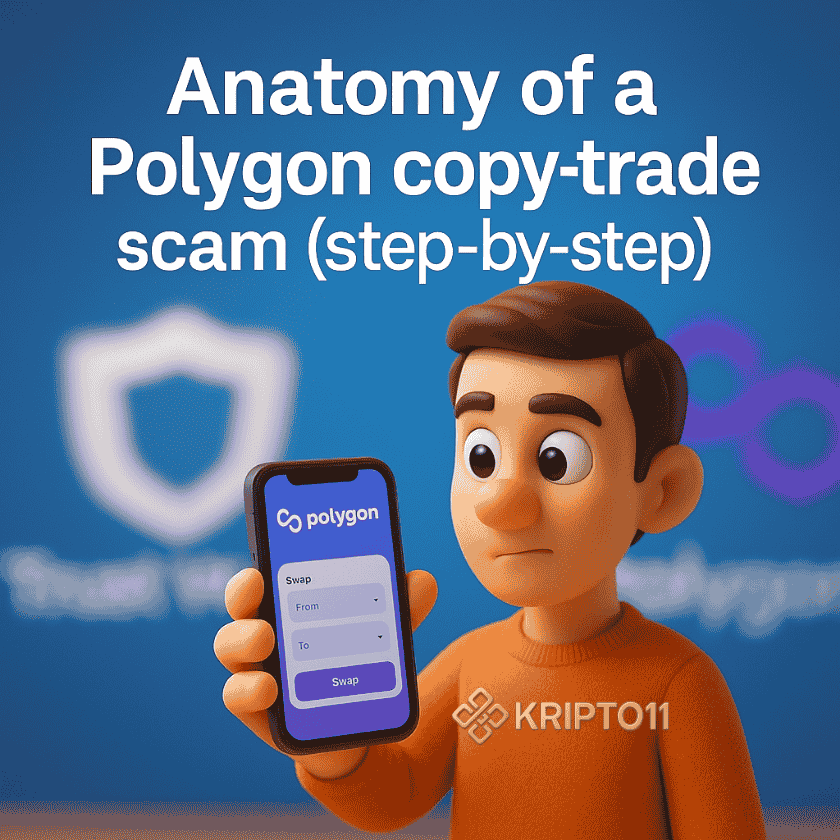
1) Hook: spotless PnL and a countdown
You see immaculate equity curves and a timer: “Next call in 05:00.” Urgency shuts down diligence. Meanwhile, comments repeat the same talking points.
2) Bridge: mirror link + bot
They push a Crypto Trading Bots integration. Allegedly it mirrors a pro wallet. In reality, it mirrors a script that front-runs your orders or switches the token list mid-transaction.
3) Consent: the fatal approval
To “automate,” the site requests an approval for a token on Polygon. The amount equals the max uint256.
You tap Approve because speed “matters.” The spender now controls movement for that asset.
4) Extraction: delayed drain
Funds don’t vanish immediately. The script waits, then pulls your tokens through a path with adequate liquidity, sometimes across networks. When you notice, it’s too late.
5) Blame shift: “Must be your settings”
Shills claim your Crypto wallet was misconfigured, or your phone lagged. Gaslighting buys time while more victims approve the same contract.
Practical defenses that still feel usable
You want speed. Scammers depend on that desire. Use these habits to keep speed without bleeding control. We’ll reference Coinbase Wallet here too, since many readers rotate across apps.
Split roles across wallets
- Cold vault: never connects; long-term holds.
- Warm spender: connects to known protocols only.
- Hot burner: connects to new sites, bots, or airdrops.
Move value between wallets; leave approvals behind.
Cap allowances everywhere
- On Trust Wallet, Coinbase Wallet, and browser wallets, choose custom caps aligned with the intended trade size plus a small buffer.
- Revoke after the session. Schedule a weekly review.
Verify contracts, not vibes
- Check token and spender addresses on Polygonscan.
- If docs don’t cite contracts, walk away.
- Compare router addresses with official GitHub or docs.
Keep your signing surface clean
- Use a dedicated browser profile for trading; minimize extensions.
- On mobile, avoid sideloaded apps. Update the OS.
- Bookmark official app URLs; never chase redirected links from comments.
Delay automation until trust is earned
Copy-trade tools might be fine after you vet the codebase, the maintainers, and the contracts. Start manual. Then, if you must automate, sandbox with a burner that holds lunch-money balances, not your life savings.
Mental model: addiction loops, dopamine, and timeouts
Copy-trading triggers the same loops as short-form video and casino apps. Small wins spike dopamine. Losses demand revenge trades. The loop eats focus and bankroll.
Recognize the hooks
- Novelty: a new “alpha” wallet review every day.
- Social streaks: posting wins to stay “on brand.”
- Escalation: bigger size to “make it back.”

Build friction on purpose
- Put a 10-minute rule between seeing a tip and acting.
- Require a 3-point check: contract, allowance cap, exit plan.
- Limit daily approvals. If you hit the limit, you stop.
If trading feels compulsive, treat Addiction as a risk vector, not a character flaw. Step back, reduce size, and reset your rules.
A safer copy-trade workflow (that still moves fast)
You can move quickly and defensively. Here’s a checklist you can actually use.
Pre-trade checklist
- Source sanity: search the exact domain + “Crypto giveaway scam”.
- Contract confirm: match token and spender on Polygonscan.
- Allowance plan: set a cap that fits the trade, not infinity.
- Exit route: identify liquidity pools and slippage limits.
- Post-trade revoke: pin a revoker and use it every session.
Live-trade execution
- Start with the burner.
- Test with tiny size. Measure slippage and spread.
- If it behaves, scale gradually. If it stinks, stop immediately.
Post-trade hygiene
- Revoke.
- Move profits to the warm wallet or to cold storage.
- Log TX hashes and notes. Patterns emerge when you journal.
Where Coinbase Wallet fits
It’s solid for Polygon as well. The same principles apply: cap approvals, avoid unknown dApps, and split roles. Wallet branding doesn’t neutralize social-engineering.
Looking ahead: Crypto regulation 2025
Regulatory moves may push copy-trading tools toward clearer disclosures and safer defaults. That’s helpful; however, rule changes won’t eliminate social-engineering or greedy UI patterns. Your routine remains the first line of defense.
FAQ: Polygon wallet Reddit Copy-Trading Fail
1) Is copy-trading on Polygon ever safe?
It can be safer when you verify contracts, cap allowances, and use a burner. Blind mirroring isn’t safe.
2) Does Trust Wallet block bad approvals?
No wallet blocks them by magic. You must set custom caps and review approvals.
3) Are “Crypto Trading Bots” reliable?
Some are fine; many are opaque. Vet code, contracts, and maintainers. Start with trivial size.
4) What if I already approved a shady dApp?
Revoke immediately, move remaining assets, and rotate to a fresh wallet.
5) Will Crypto regulation 2025 stop these scams?
It may reduce blatant schemes, yet social-engineering and fake social proof will persist. Routines still matter.



Pingback: 5 Things I Wish I Knew Before Using Mint NFT Marketplace - KRIPTO11