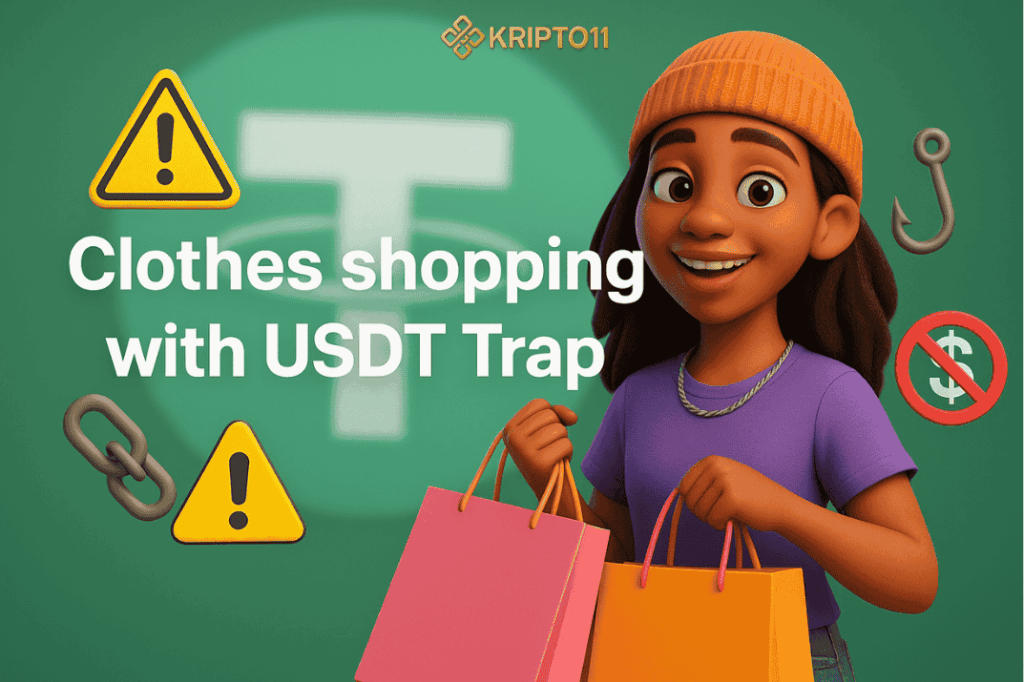

Counterfeit drops thrive on speed, hype, and “USDT only.” The pitch looks slick: limited-run hoodies, archive sneakers, and a “crypto discount” if you pay right now. Yet that flow often hides the Usdt trap, a play where scammers push you into irreversible payments, no refunds, and zero brand accountability. In this guide, we’ll map how the trick unfolds, why “Clothes shopping with crypto” gets weaponized in streetwear circles, and how to defend yourself before a bargain turns into expensive fraud.
Usdt trap hack: the playbook scammers use
Shady sellers run a short funnel that many buyers miss. They even label the ruse a Usdt trap hack inside private chats because it converts impulse into guaranteed money.
How the “USDT only” funnel works
- Hook with fakes that look real. Product shots mimic official campaign lighting and angles.
- Hype a rush timer. “Ends in 10 minutes” forces you past due diligence.
- Lock payment rails. They say “USDT only” to avoid chargebacks and holdbacks that cards or PayPal create.
- Break your refund path. A “refund form” exists but routes to nowhere, often a chatbot loop.
- Silence the receipt. You receive a TX hash, not an invoice from a real merchant.
Why USDT is the scammer’s favorite
USDT settles fast, and many shoppers hold it on exchanges already. Because it feels like digital cash, victims treat a transfer as routine. However, a USDT transfer to an unknown wallet is final for you; meanwhile, the seller can tumble proceeds through multiple hops. Consequently, they get liquidity; you get no recourse.
Counterfeit streetwear: near-perfect fakes, real-world losses
“Looks legit” isn’t proof. Premium counterfeits mirror stitching guides, box labels, and even NFC tags.
Visual tells (that still show up under pressure)
- Too many size runs for a supposedly rare drop.
- Uniform wear patterns in “sample” photos that should vary.
- SKU codes that exist, yet link back to older seasons.
- Certificate QR that resolves to a static, non-rotating page.
Operational tells that beat the eye test
- The seller insists on Crypto and blocks card checkout.
- The “warehouse” location flips countries between chats and listings.
- Shipping numbers appear but never register with a carrier.
- Returns require “original seal” and “unbroken NFC,” which makes testing impossible.
Therefore, even when the garment seems flawless, the counterfeit risk remains high if the ops are crooked.
The payment flow: from chat to “USDT only” to zero refunds
Bad actors optimize the flow as carefully as any D2C brand, just in the wrong direction.
Chat layer: Telegram and “Crypto eCommerce”
First, a Telegram channel drops links to a “store.” The domain looks disposable. Moderators pin customer “wins” that recycle the same three images. Because the chat feels social, you relax quickly. Then a bot posts a pay link with the USDT only requirement and a short address checksum, nudging you to act now.
Wallet layer: friction shaved, rights removed
Next, a checkout page asks you to connect a wallet or copy an address. You copy, because it feels Is USDT safe?. However, you still lack merchant identity, order ID standards, and proper Terms of Sale. Moreover, the site presents no return workflow beyond a throwaway form.
After-payment layer: refund theater
Finally, the seller promises a refund after “quality checks” fail or a size mismatch occurs. But the “refund desk” insists on new hoops: a different chain, a “verification deposit,” or a form that collects more phishing data. Consequently, time passes and you never recover funds.
Bottom line: the Scammer converts urgency into a one-way USDT flow. You carry all risk; they keep the coin.
Compliance reality: MiCA, black-listing, and what that means for you
People ask two things: “MiCA regulation USDT” and “Can USDT be black-listed?” Let’s keep it simple and practical for shoppers.
MiCA and you (plain English)
The EU’s MiCA framework increases obligations for issuers and service providers in the region. Therefore, exchanges and custodians in MiCA jurisdictions will bolster checks, disclosures, and risk controls. That may help against platform-level abuse; however, it does not retroactively protect a direct wallet-to-wallet USDT payment you sent to a fraud shop.
USDT trap: Can USDT be black-listed?
Issuer-level controls can freeze or black-list specific token contracts or addresses under certain circumstances. But that mechanism typically involves compliance processes, legal triggers, and cooperation with platforms or authorities. As a shopper, you cannot rely on black-listing to retrieve money from a random seller. Practically, you should assume: once sent, it’s gone.
Black-listing vs. exchange reviews
Even if an address gets flagged, the immediate effect often lands on exchanges and custodial wallets tasked with monitoring inflows. Consequently, your funds can encounter holds or extra KYC if they touched tainted clusters-even when you are the victim. Thus, prevention beats recovery.
A safer shopping playbook (copy, adapt, and stick to it)
You can still find deals; just structure the risk.
Before you buy: USDT trap
- Prove the merchant first. Search the brand’s authorized retailer list or official partner pages. No listing, no purchase.
- Demand more rails. If the store blocks cards and insists on USDT only, walk.
- Check the domain. Age, certificate details, and a real company name matter.
- Verify product lineage. Ask for macro shots of labels, stitching, and packaging codes; then compare with community guides.
- Separate wallets. Use a clean shopping wallet for transfers. Keep savings isolated.
- Set a budget ceiling. Decide the max you’ll risk before Crypto FOMO starts.
USDT trap-At checkout
- Use one-time amounts. Never approve broad allowances; send a single transfer.
- Match addresses carefully. Compare the pasted address to the displayed one; confirm on a second screen.
- Write your own memo. Add a local note with SKU, size, and seller handle for later disputes.
- Stop for silence. If the seller rushes you, slow down on purpose.
After payment-USDT trap
- Capture evidence. Save chat logs, site pages, TX hashes, and listing screenshots.
- Track shipping early. A label that doesn’t ping in 48–72 hours probably won’t.
- Escalate quickly. If the shop stalls, notify your exchange’s support that your transfer may relate to Fraud—they can flag addresses.
- Warn others. Post anonymized TX and domain info in buyer communities.
Spotting near-perfect counterfeits in 60 seconds
When time is short, use this rapid screen.
- Price vs. market floor. If the item sits 40–70% below platform floors, assume counterfeit.
- Returns policy. “All sales final” on luxury apparel screams risk.
- Photo fingerprint. Reverse-image search the gallery. If it lands on older blogs, it’s stolen.
- Packaging density. Legit sneakers arrive with consistent tissue, tag font weights, and stamp spacing.
- Community tell. Reputable sellers don’t fear third-party legit checks.
FAQ: USDT trap in clothes shopping with crypto
1) What is the Usdt trap in clothes shopping with crypto?
The clothes shopping with crypto, It’s a funnel that forces USDT only to remove chargebacks, then blocks refunds.
2) Is paying with Crypto ever safe for streetwear?
Yes: when a verified merchant offers multiple rails, clear policies, and traceable invoices.
3) Can I get money back after a USDT transfer?
Usually no. Transfers are final for you. Act fast only to report and flag addresses.
4) Do scammers always use Telegram?
Not always. However, private Telegram chats and bots increase pressure and hide identity.
5) What’s one rule that kills most scams?
If a store insists on USDT only and has no returns, don’t buy, no matter the deal.